Introduction (AI Strategies Revolutionizing Event Management)
The event management industry is evolving at an unprecedented pace, driven by technological innovation and changing audience expectations. In today’s competitive landscape, simply organizing an event is not enough – organizers must create memorable, personalized, and seamless experiences. This is where Artificial Intelligence (AI) is making a powerful impact.
AI is transforming traditional event planning into a data-driven, automated, and highly efficient process. From predicting attendee behavior to automating marketing campaigns and enhancing on-site experiences, AI is redefining how events are conceptualized and executed.
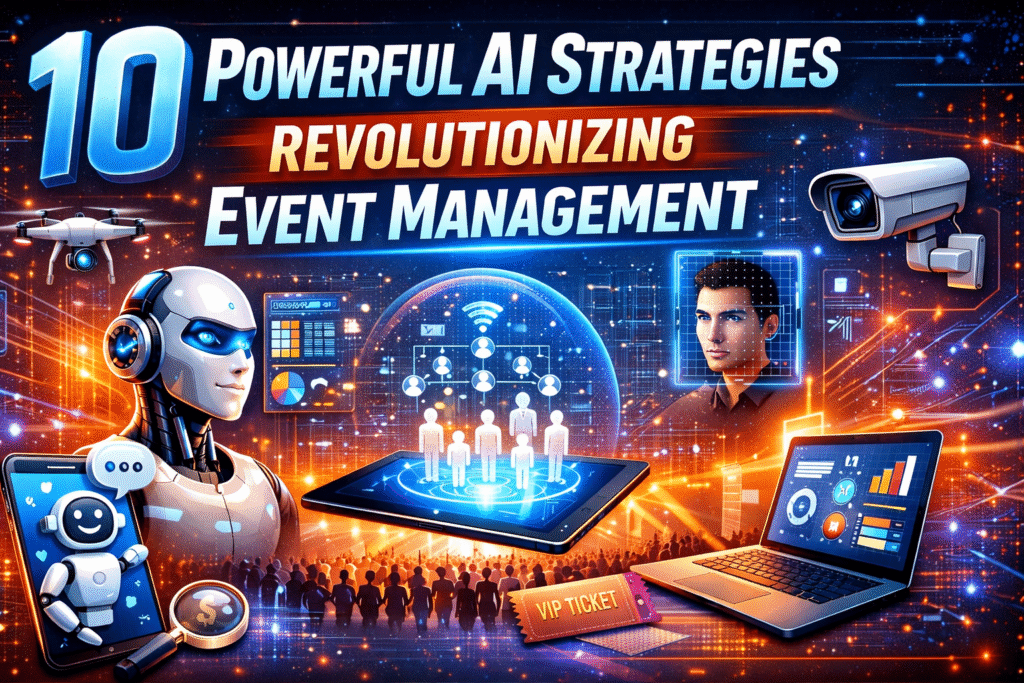
This in-depth guide explores the 10 powerful AI strategies revolutionizing event management, offering actionable insights for event planners, marketers, and businesses aiming to stay ahead of the curve.
Understanding AI in Event Management
Artificial Intelligence refers to machines and systems that can perform tasks typically requiring human intelligence, such as learning, problem-solving, and decision-making. In event management, AI combines technologies like machine learning, natural language processing, and predictive analytics to streamline operations and enhance attendee engagement.
AI enables event organizers to:
- Analyze large datasets
- Automate repetitive tasks
- Personalize user experiences
- Optimize event performance
As a result, events become more efficient, scalable, and impactful.
1. Predictive Analytics for Smarter Planning
Predictive analytics is one of the most powerful applications of AI in event management. By analyzing historical data and current trends, AI can forecast future outcomes.
Key Benefits:
- Accurate attendance predictions
- Better budget allocation
- Improved resource management
For example, AI can predict ticket sales patterns, helping organizers adjust pricing strategies and marketing efforts accordingly. This reduces uncertainty and improves decision-making.
2. AI-Powered Event Personalization
Personalization has become a critical factor in delivering successful events. AI allows organizers to tailor experiences based on individual preferences.
How It Works:
- Tracks attendee behavior and interests
- Recommends sessions, speakers, and activities
- Creates personalized agendas
This level of customization increases engagement and satisfaction, making attendees feel valued and understood.
3. Intelligent Chatbots for Real-Time Support
AI chatbots are revolutionizing communication in event management. They provide instant assistance and improve the overall attendee experience.
Features:
- 24/7 customer support
- Instant responses to queries
- Automated registration assistance
Chatbots reduce the workload on support teams while ensuring attendees receive timely information.
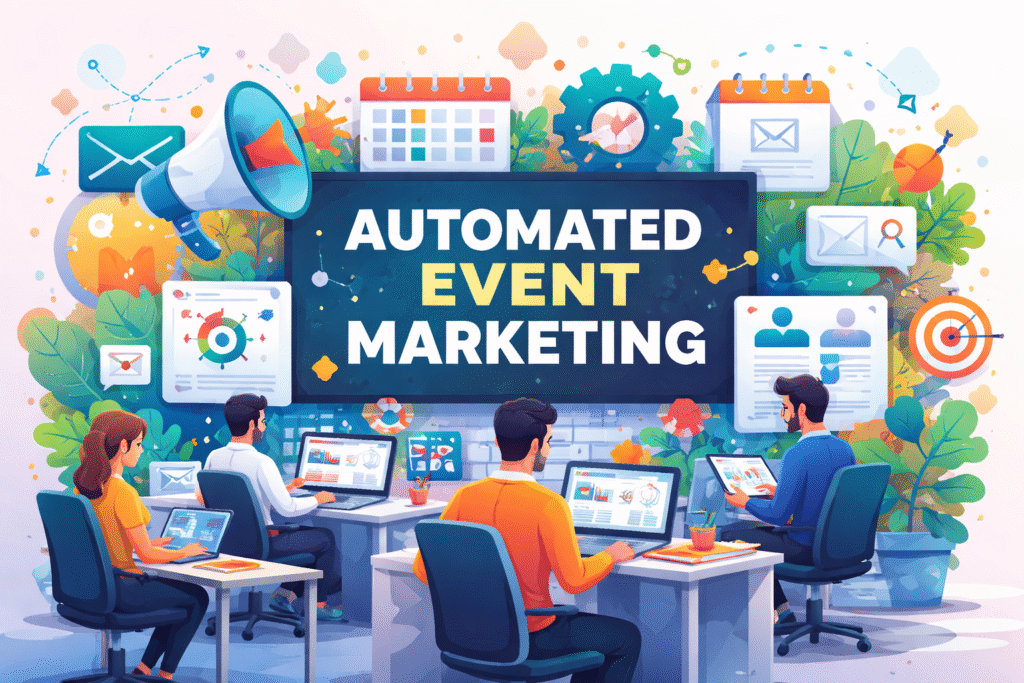
4. Automated Event Marketing
Marketing plays a crucial role in the success of any event. AI enhances marketing efforts by making them more targeted and efficient.
AI Marketing Capabilities:
- Audience segmentation
- Email automation
- Social media optimization
- Predictive campaign analysis
AI tools analyze user data to deliver the right message to the right audience at the right time, resulting in higher conversion rates.
5. Smart Networking and Matchmaking
Networking is a key reason people attend events. AI improves networking by connecting attendees with similar interests and goals.
Benefits:
- Meaningful connections
- Increased engagement
- Better event value
AI-powered matchmaking systems suggest connections based on professional profiles, preferences, and behavior, enhancing the networking experience.
6. Facial Recognition and Seamless Check-Ins
AI-powered facial recognition technology is transforming event entry and security.
Advantages:
- Faster check-in process
- Enhanced security
- Reduced queues
Attendees can enter events without physical tickets, improving convenience and efficiency.
7. Dynamic Pricing Optimization
AI enables dynamic pricing strategies by analyzing demand and market conditions in real time.
How It Helps:
- Maximizes ticket revenue
- Adjusts pricing based on demand
- Identifies optimal pricing strategies
This ensures that event organizers can achieve better profitability while maintaining accessibility.
8. AI-Driven Content Recommendations
Content is at the heart of any event. AI ensures that attendees get the most relevant and engaging content.
Applications:
- Personalized session recommendations
- Smart agenda creation
- Real-time content suggestions
By delivering relevant content, AI enhances attendee satisfaction and participation.
9. Real-Time Data Insights and Analytics
AI provides real-time insights into event performance, enabling organizers to make quick decisions.
Key Metrics:
- Attendance rates
- Engagement levels
- Session popularity
These insights allow organizers to adjust strategies during the event, ensuring optimal outcomes.
10. Post-Event Analysis and Continuous Improvement
AI plays a crucial role even after the event ends. It helps analyze data and generate actionable insights for future events.
Benefits:
- Detailed performance reports
- Attendee feedback analysis
- ROI measurement
This ensures continuous improvement and better planning for upcoming events.
Benefits of AI in Event Management
1. Enhanced Efficiency
AI automates repetitive tasks, saving time and effort.
2. Cost Optimization
Better resource allocation reduces operational costs.
3. Improved Attendee Experience
Personalization and real-time interaction enhance satisfaction.
4. Data-Driven Decisions
AI provides actionable insights for better planning.
5. Scalability
AI enables seamless management of large-scale events.
Challenges of Implementing AI (AI Strategies Revolutionizing Event Management)
Despite its advantages, AI adoption comes with challenges:
1. High Implementation Costs
Initial setup and integration can be expensive.
2. Data Privacy Concerns
Handling sensitive attendee data requires strict security measures.
3. Technical Expertise
AI tools require skilled professionals for effective use.
4. Integration Issues
Combining AI with existing systems can be complex.
Future Trends in AI for Event Management
1. Hyper-Personalization
AI will create highly individualized event experiences.
2. Virtual and Hybrid Events
AI will enhance online and hybrid event engagement.
3. Voice and Conversational AI
Voice assistants will guide attendees during events.
4. Augmented Reality Integration
AI combined with AR will create immersive experiences.
5. Fully Automated Event Ecosystems
Future events may rely heavily on AI-driven automation.
How to Implement AI in Your Event Strategy (AI Strategies Revolutionizing Event Management)
Step 1: Define Objectives
Identify areas where AI can add value.
Step 2: Choose the Right Tools
Select AI solutions that fit your needs and budget.
Step 3: Train Your Team
Ensure your team understands AI technologies.
Step 4: Start Small
Begin with basic applications and scale gradually.
Step 5: Monitor and Optimize
Continuously analyze performance and improve strategies.
Real-World Use Cases (AI Strategies Revolutionizing Event Management)
Corporate Events
AI helps manage large conferences with personalized agendas and networking opportunities.
Weddings and Social Events
AI tools assist in guest management and personalized experiences.
Exhibitions and Trade Shows
AI enhances visitor engagement and lead generation.
Music Festivals
AI improves crowd management and security.
Conclusion (AI Strategies Revolutionizing Event Management)
Artificial Intelligence (AI) is rapidly transforming the event management industry, redefining how events are conceptualized, planned, executed, and evaluated. In an era where audiences expect seamless, personalized, and engaging experiences, AI has emerged as a powerful enabler of innovation and efficiency. By leveraging advanced technologies such as predictive analytics, automation, machine learning, and real-time data insights, event planners can now deliver exceptional outcomes with greater precision and minimal manual effort. As a result, AI strategies revolutionizing event management are not merely enhancing traditional processes but reshaping the entire ecosystem of the industry.
One of the most significant contributions of AI lies in its ability to harness and analyze vast amounts of data. Through predictive analytics, event organizers can forecast attendee behavior, anticipate trends, and make informed decisions. This data-driven approach allows planners to optimize everything from venue selection and ticket pricing to marketing strategies and resource allocation. By understanding audience preferences and expectations in advance, organizers can ensure that every aspect of an event aligns with attendee needs, thereby increasing satisfaction and overall success. Such advancements highlight the importance of AI strategies revolutionizing event management in enabling smarter and more strategic decision-making.
Personalization is another area where AI is making a remarkable impact. Modern attendees seek experiences tailored to their interests, and AI-powered tools make this possible by analyzing user behavior and preferences. From customized event agendas and session recommendations to targeted marketing campaigns and intelligent networking suggestions, AI enhances engagement at every stage of the attendee journey. This level of personalization not only improves participant satisfaction but also strengthens brand loyalty and long-term relationships. These innovations clearly demonstrate how AI strategies revolutionizing event management are elevating audience engagement and redefining event experiences.
Automation further streamlines event management by reducing repetitive and time-consuming tasks. AI-driven chatbots, automated email campaigns, smart scheduling systems, and virtual assistants enable organizers to manage registrations, respond to inquiries, and coordinate logistics with efficiency and accuracy. By minimizing manual workloads, automation allows event professionals to focus on strategic planning, creativity, and innovation. This results in cost savings, improved productivity, and more polished event experiences, reinforcing the value of AI strategies revolutionizing event management in driving operational excellence.
Real-time insights and analytics are equally transformative. AI tools provide instant feedback on attendee engagement, session performance, and operational efficiency. Event planners can monitor metrics such as participation rates, audience sentiment, and social media activity, enabling them to make data-driven adjustments during the event itself. This agility ensures smoother operations, enhances attendee experiences, and maximizes return on investment. Furthermore, post-event analytics offer valuable insights that help organizers refine strategies and continuously improve future events, further proving the impact of AI strategies revolutionizing event management in shaping data-driven success.
The ten powerful AI strategies discussed in this guide highlight the immense potential of artificial intelligence in shaping the future of the event industry. From smart marketing automation and predictive planning to AI-powered networking and immersive virtual experiences, these innovations demonstrate how technology is redefining success in modern events. While challenges such as data privacy, implementation costs, and the need for technical expertise do exist, the benefits of AI far outweigh the risks. With proper planning, ethical considerations, and strategic adoption, organizations can overcome these hurdles and unlock new opportunities for growth and excellence.
As technology continues to evolve, the role of AI in event management will only become more prominent. Businesses and event professionals who embrace these advancements will gain a significant competitive advantage. By integrating AI into their strategies, they can create smarter, more engaging, and highly successful events that resonate with today’s tech-savvy audiences. Ultimately, AI is not just a trend but a transformative force that is reshaping the future of event management, empowering planners to deliver memorable experiences that set new standards for innovation and success.