
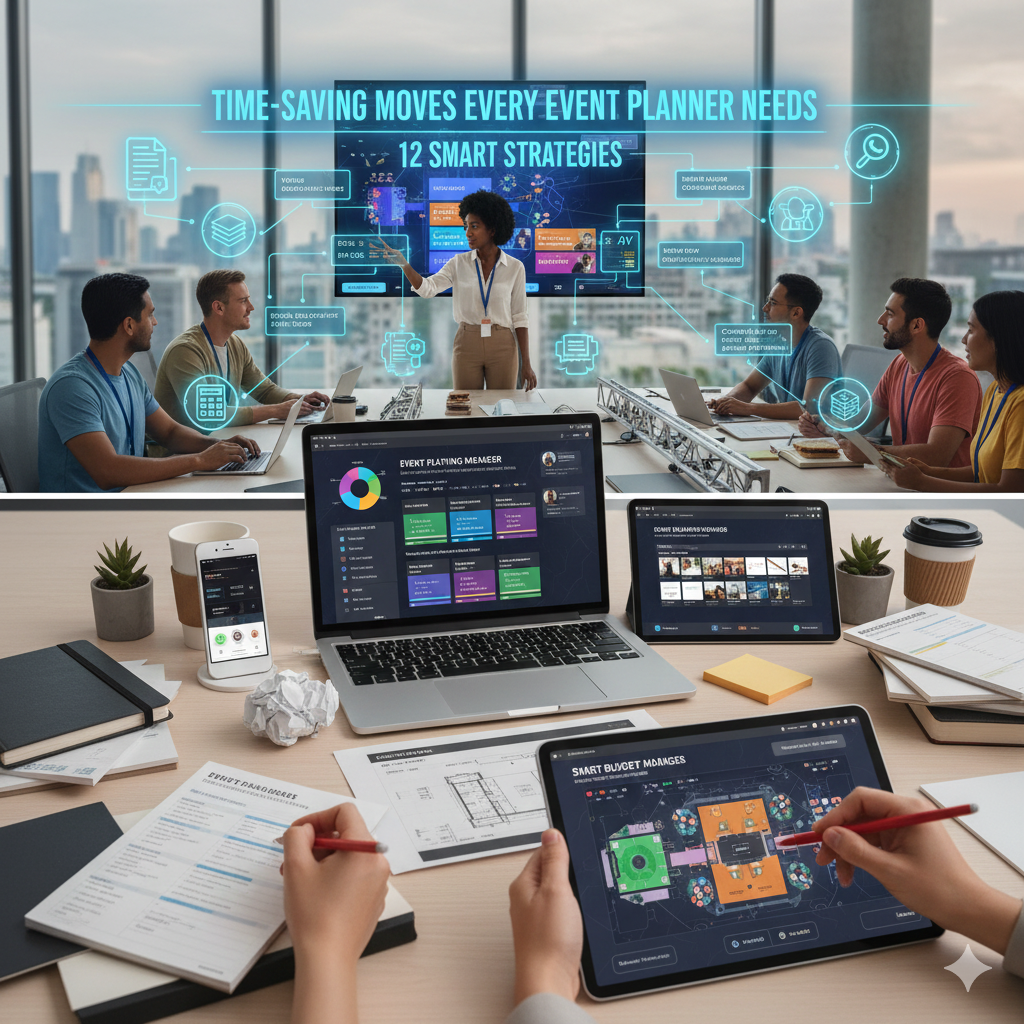
12 Smart Time-Saving Moves Every Event Planner Needs to Know
Event planning is fast-paced, demanding, and filled with countless moving parts. If planners don’t follow efficient systems, tasks pile up, delays occur, and stress becomes unavoidable. That’s exactly why applying smart and strategic Time Saving Moves Every Event Planner Needs is essential not optional.
These moves help planners manage workflows, collaborate better, reduce repetitive work, and stay mentally organized even during high pressure events. Whether you’re planning a corporate conference, a wedding, a concert, or a community festival, these techniques help cut down hours of unnecessary effort while boosting the quality of execution.
This in-depth guide breaks down 12 powerful strategies every event planner can implement immediately.
1. Use Pre-Made Planning Templates
One of the most effective Time-Saving Moves Every Event Planner Needs is creating a library of ready to use templates. Templates eliminate repetitive work and boost consistency across all events.
Why Templates Save Hours of Work
Templates reduce decision making by giving you pre built structures for:
- Budgets
- Event timelines
- Venue comparison sheets
- Vendor contract formats
- Task assignment charts
- Social media plans
- Guest list sheets
Instead of building these documents from scratch for every event, you simply duplicate and customize.
Best Templates Every Planner Should Maintain
- Run of Show (ROS) templates
- Vendor evaluation sheets
- Risk management templates
- Payment tracker templates
- Client onboarding questionnaire
This collection becomes your personal toolkit for fast, organized planning.
2. Automate Repetitive Tasks
Automation is one of the greatest modern Time-Saving Moves Every Event Planner Needs, especially when handling large events with multiple communication layers.
What Event Tasks You Can Automate
- Automated event registration confirmations
- Attendee reminder emails
- Follow up messages
- Invoice generation
- Task reminders
- Lead capture and categorization
Instead of sending 300 manual emails, let the system do it for you.

Tools That Make Automation Easy
Here are top tools you can use:
Purpose Tool
Email automation – Mailchimp, HubSpot
Task automation – Zapier, Make
Project workflows – Airtable Automations
Client communication – Calendly, WhatsApp API
3. Build a Vendor Database
Searching for vendors repeatedly is time-consuming. A centralized vendor database allows you to access all vendor details instantly, making it one of the essential Time-Saving Moves Every Event Planner Needs.
What to Include in a Vendor Database
- Category (Catering, Decor, Photography, AV, etc.)
- Packages + price ranges
- Contact details
- Response time rating
- Past event reviews
- Availability patterns
- Service quality scoring
Benefits of Having a Vendor Database
- Faster vendor selection
- No repeated research
- Easier negotiation
- Better event to event consistency
It’s a long term asset that saves countless hours every year.

4. Use Smart Budgeting Tools
Managing event finances manually often leads to delays and errors. Smart budgeting tools streamline your financial workflows, making them one of the most effective Time-Saving Moves Every Event Planner Needs.
Features of Efficient Budgeting Tools
- Real time cost tracking
- Auto updating totals
- Vendor wise expense breakdown
- Access for team members
- Built in invoice storage
- Exportable reports
Recommended Budgeting Tools
- Excel + Google Sheets
- Monday.com
- Zoho Books
- QuickBooks
- Notion Budget Templates
Using these tools cuts your financial management time by 30–40%.
5. Implement a Clear Communication System
Communication issues cause delays, duplicate work, and confusion. A structured system is essential.
Best Communication Methods for Event Teams
- WhatsApp groups for quick updates
- Slack for department wise channels
- Trello for project communication
- Email templates for standard replies
- Voice notes for urgent instructions
Client Communication Simplification
Use:
- Pre made briefing forms
- Shared event documents
- Automated calls & reminders
- Standard FAQs
A clear system ensures fast decision making and minimal misunderstandings.
6. Delegate Tasks to a Skilled Team
Trying to do everything yourself causes burnout and delays. Smart delegation is one of the most impactful Time-Saving Moves Every Event Planner Needs.
How to Delegate Effectively
- Assign tasks based on strengths
- Define roles clearly
- Share timelines and responsibilities
- Use project management tools
- Trust your team
Sample Delegation Structure
- Logistics Lead: Transport, load-in/out
- Vendor Lead: Coordination and payments
- Decor Lead: Setup, props, visuals
- Stage Lead: Performers, cues, sequences
- Guest Management Lead: registrations, seating
Delegation frees your mind for critical decision making.
7. Use Time-Blocking for Daily Tasks
Time blocking is a proven productivity technique that helps planners stay focused, making it one of the practical Time-Saving Moves Every Event Planner Needs.
How Time Blocking Works
You divide your day into focused blocks such as:
- 10–11 AM: Vendor follow-ups
- 12–1 PM: Budget review
- 3–4 PM: Team coordination
- 5–6 PM: Event timeline planning
Benefits for Event Planners
- Zero multitasking
- Reduced confusion
- Faster task completion
- Better focus
- Easier scheduling
8. Standardize Event Checklists
A standardized checklist prevents errors and improves planning speed, making it one of the essential Time-Saving Moves Every Event Planner Needs.
Essential Pre Event Checklist Items
- Concept finalization
- Venue booking
- Vendor confirmation
- Budget planning
- Guest list mapping
On-the-Day Checklist
- Setup inspection
- Sound & light testing
- Team briefings
- Registration counter readiness
Post Event Checklist
- Vendor payments
- Feedback collection
- Material return
- Review meeting
Using the same checklist across events saves days of planning time every month.
9. Rely on Digital Floor Plans
Visualizing layouts digitally helps teams understand setups faster, making it one of the key Time-Saving Moves Every Event Planner Needs.
What Digital Floor Plans Include
- Stage positions
- Guest seating
- Decor zones
- Entry & exit flow
- AV placements
- Catering points
Tools for Digital Layouts
- Canva
- AllSeated
- Social Tables
- Foyr Neo
These tools allow quick revisions without manual labor.
10. Optimize On-Site Setup Processes
On site setup can make or break timelines. A planned approach saves hours.
Ways to Speed Up Setup
- Create departmental zones
- Use color coded ID cards
- Define a setup sequence
- Share layout map beforehand
- Conduct micro briefing on arrival
Manage Vendors Efficiently
- Pre schedule arrival times
- Assign a vendor coordinator
- Share setup deadlines clearly
11. Create Reusable Event Assets
Reusable assets drastically reduce time spent on design, printing, and setup, making them one of the most valuable Time-Saving Moves Every Event Planner Needs.
What You Can Make Reusable
- Stage backdrops
- Frame structures
- Signage boards
- Lighting setups
- Fabric props
- Social media templates
Benefits of Reusability
- Lower costs
- Faster setups
- Consistent branding
- Less decision fatigue
12. Conduct Post Event Reviews for Faster Future Planning
Every event is a learning opportunity. Analyzing it helps avoid repeated issues, making this review one of the important Time-Saving Moves Every Event Planner Needs.
What to Review After Every Event
- What caused delays
- Which vendors excelled
- Team performance
- Guest experience feedback
- Budget accuracy
- Timeline effectiveness
Why Post Event Analysis Saves Time
- Helps predict future issues
- Improves workflows
- Minimizes trial and error
- Strengthens vendor selection
- Increases team efficiency
Conclusion
The planning world is demanding, but with the right Time-Saving Moves Every Event Planner Needs, you can reduce stress, eliminate unnecessary work, and deliver extraordinary events consistently. These 12 strategies help streamline communication, automate tasks, improve team coordination, and simplify operations turning you into a more organized, productive, and efficient planner.
These techniques are not one time tips but long-term habits that dramatically increase your ability to handle multiple events with ease and confidence.